
Three methods correspond to three scenarios
The rain test uses a swing pipe or nozzle to simulate rainwater erosion, and evaluates the water-blocking ability of seams, cable outlets and button holes under dynamic water flow, which is close to the real water spraying conditions of outdoor installation surfaces. In the water immersion test, the sample is placed in a water tank with a specified depth and kept for a period of time to evaluate the sealing reliability under hydrostatic pressure, which is more sensitive to the compression amount of the sealing ring and the rigidity of the shell.
The air tightness test inflates or evacuates the inner cavity, and determines whether there is leakage through pressure changes. It is fast and quantifiable, and is suitable for full inspection of the production line. However, it can only indicate whether it is tight or not, and cannot be directly equivalent to a certain waterproof level.
The order of the three methods is also important. In the development stage, airtight is first used to quickly screen the structure and sealing ring combination, and then a water tank or rain is used for confirmation; in the mass production stage, airtight is used to maintain consistency, and parts are regularly selected for waterproof review of the entire machine.
How to determine the air tightness threshold
A common practice is to first determine the waterproof target of the product, and then use air tightness for process control. The threshold is established through comparative experiments: take a batch of samples that have passed the rain or water immersion verification, measure their pressure attenuation distribution, take the lower limit of the distribution and leave a safety margin as the production line judgment value.
The threshold is not determined once and for life. The structure, sealing ring hardness or supplier must be recalibrated, otherwise there will be deviations in which the production line is fully qualified but the measured water seeps slowly.
Failure location and inspection points
Analysis of failed parts shows that water seepage is concentrated in the corners of sealing grooves, stud holes, cable outlets and lens pressure rings. The sealing ring at the corner of the sealing groove is easy to wrinkle, the perforation position depends on the thread seal, and the wire outlet depends on the locking method and the wire diameter. If self-tapping screws are used for threaded holes, repeated disassembly and assembly will gradually cause the seal to fail.
- Check the dynamic water flow when exposed to rain, check the hydrostatic pressure when soaked in water, and conduct a complete air tightness inspection.
- The airtightness threshold is inferred from the attenuation distribution of the verified sample.
- Recalibrate the threshold after the structure or sealing ring is changed.
- After the test, open the shell and check for water traces and condensation in the inner cavity.
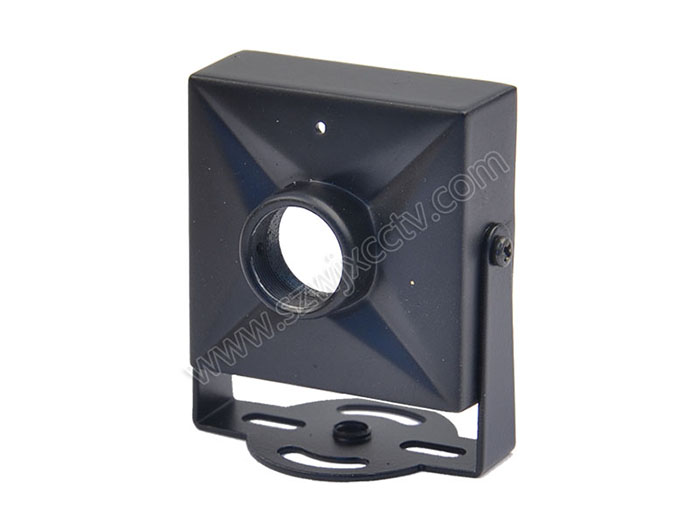
During the inspection, the sample should be kept in the actual assembled state, and the sealing ring should not be disassembled and assembled repeatedly. After the test, open the shell and check whether there are any water marks or condensation in the inner cavity. Only the appearance can easily miss the slow penetration. Weijiaxin conducts rain and air-tightness comparisons simultaneously during the prototype stage of waterproofing and gun housing, and determines the sealing groove section and compression amount before opening the mold.