
The coatings from the two processes are not the same.
Powder coating is an external coating: The powder enters the oven after electrostatic adsorption, cures at 180–200°C, and forms a crosslink with the substrate. The typical film thickness is 60–120 μm. Anodizing causes the aluminum substrate itself to grow an oxide film. The film thickness for decorative and protective purposes is generally 10–25 μm. The film layer is integrated with the metal and will not peel off as a whole.
Differences in film thickness directly lead to differences in structure. Powder coating alters the external dimensions of parts. Threaded holes, sealing grooves, and mating spigots must be masked before coating or re-tapped after coating. Anodizing only changes dimensions at the micrometer level, with minimal impact on mating. However, grooves and edges are prone to thinner coating and a whitish appearance due to electric field concentration. It is not practical to mix the two processes on the same part. Usually, the entire part is treated uniformly, and local issues are addressed through masking.
Differences in the suitability of die-cast parts and extruded profiles
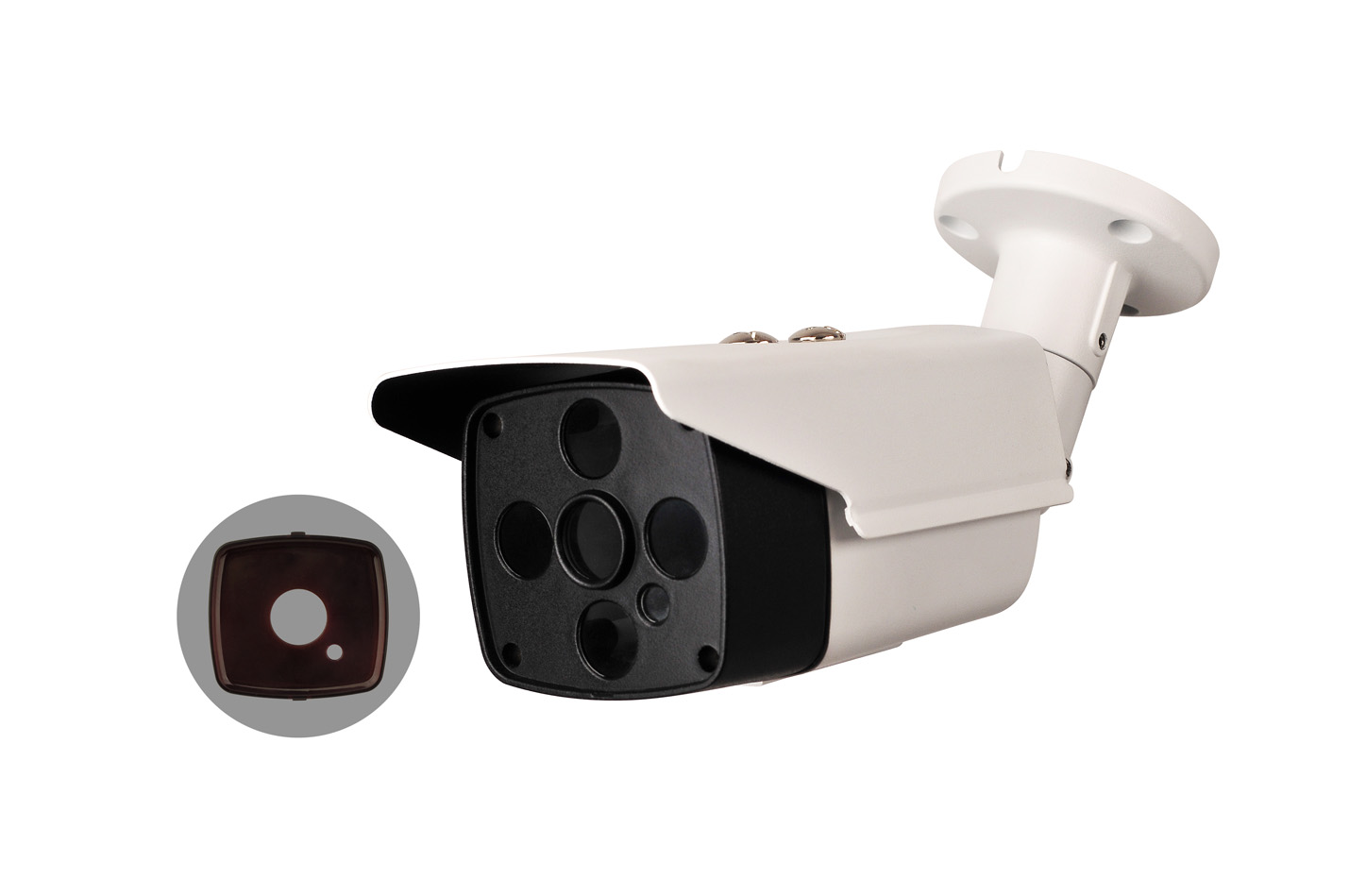
Anodizing is sensitive to the composition of the substrate. Die-cast aluminum alloys have a high silicon content and micropores inside. Direct anodizing often results in blackening, mottling, and localized uncoated areas. Appearance parts generally do not use this method. Extruded profiles have a uniform composition and a clear color after anodizing, making them suitable for decorative surfaces. Camera housings are mostly die-cast parts, which is why powder coating is more common on the entire housing of the camera.
Weather resistance and wear resistance depend on the location of use.Polyester powder thick films have strong covering power for substrate pinholes and sanding marks, and their color is well-preserved when exposed to outdoor sunlight and rain. Oxide films have high hardness and abrasion resistance, and they do not easily show marks from repeated touching, cleaning, and wiping. However, the film layer is somewhat brittle and prone to cracking upon impact with sharp corners, and the cracks can become starting points for corrosion.
How to specify and how to inspect
The recommended order for selection is to evaluate based on fit precision, appearance requirements, and operating environment, in that order: For sealing grooves and mating surfaces, prioritize dimensional accuracy and choose between anodizing or masking powder coating. For large-surface appearance parts, opt for powder coating to cover die-casting defects with a thick film. In high-humidity, high-salt environments, both options require thorough pretreatment and sealing.
Cost is not just about the unit price. For powder coating, labor costs are calculated based on the masked area. For parts with complex shapes and numerous threaded holes, the time required for disassembly, hanging, and re-tapping increases. Anodizing costs are calculated based on surface area, with fixture usage and color rework being the main variables. Once production volumes have stabilized, the difference in unit cost between the two is often smaller than the fluctuations caused by rework.
- Coating thickness: Measure points on the flat surface and edges separately. Thin edges are a common non-conformance.
- Adhesion: Use the cross-cut method in conjunction with tape peeling to observe whether the coating peels off in sheets.
- Color difference: Compare with the approved color sample under standard lighting conditions. Do not assess based on a single piece.
- Corrosion resistance: Perform a salt spray test on test pieces from the same batch that were processed in the same furnace. Pay special attention to the edges, corners, and scratched areas during observation.
Weijiiaxing incorporates masking, film thickness, and color difference into batch records on its own surface treatment line, allowing customers to directly compare historical data when changing colors or redesigning. There are no absolutely superior or inferior processes. By clearly prioritizing tolerances, appearance, and weather resistance, the selection process will not need to be repeated.