
Who owns the drawings and molds
OEM means that the customer provides drawings and specifications, and the factory processes them according to the drawings. The ownership of the drawings and molds is usually on the customer's side; ODM means that the factory provides mature structural solutions, and the customer puts his or her own brand on the model after selection. This difference determines the subsequent boundaries of responsibility: in OEM projects, the size and structure are defined by the customer, while in ODM projects, the factory is responsible for the achievability of the structure.
The ownership of the mold must be clearly stated in the contract. A common agreement in OEM projects is that the customer pays to open the mold, the mold belongs to the customer, and priority is given when returning the order; in ODM projects, the mold is mostly invested by the factory, and the customer gets the product rather than the mold. Different agreements make it easier to change suppliers later.
The difference between initial investment and delivery time
The preliminary work of the OEM project focuses on drawing verification and process confirmation. The customer has clearly thought out the structure. The factory mainly evaluates whether the wall thickness, demoulding and tolerance can be achieved. The delivery time is mainly based on mold opening and trial molding. In the early stage of the ODM project, solution selection and structural matching are required. The customer's product definition may not be finalized yet, and the factory needs to provide several shell solutions for comparison.
The cost structure is also different. The OEM quotation items are clear: materials, processing, surface treatment, and mold amortization; the ODM quotation also includes investment in structure and mold development. The unit price is usually higher than pure processing, but the customer saves the self-development cycle.
There are also differences in communication methods. OEM projects are based on drawings and specifications, and the list of questions is answered one by one. In the early stage of ODM projects, multiple rounds of structural solutions are discussed. The factory needs to give suggestions on the combination of appearance, interfaces and costs, and the customer compares several solutions. The former focuses on execution, while the latter focuses on cooperation.
Who is responsible for changes
The difference can be best seen in design changes after mass production. Changes to the OEM project are initiated by the customer, and the factory evaluates the impact on the mold and process and quotes. If the change in the ODM project involves the structure, the factory needs to determine whether it affects the existing verification results, and redo the sealing and drop tests if necessary.
- Clear the ownership and custodian of drawings, molds, and program documents;
- Confirm changes in writing and indicate the effective batch;
- OEM projects check the process feasibility of customer drawings and provide written feedback;
- ODM projects provide structural descriptions and verification records to facilitate customer submission.
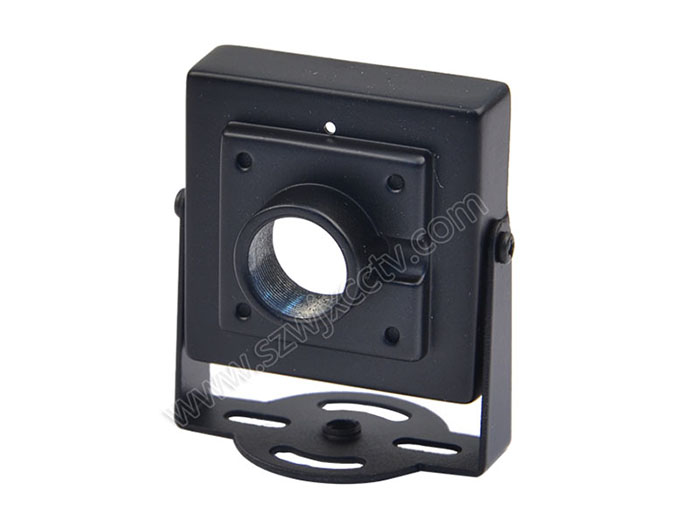
Weijiaxin undertakes two types of projects at the same time, OEM processes according to drawings, and ODM provides structural and appearance solutions. Customers choose according to their own R&D capabilities and time requirements. If ownership and change rules are clearly discussed in the early stage, there will be less disputes during the mass production stage.