
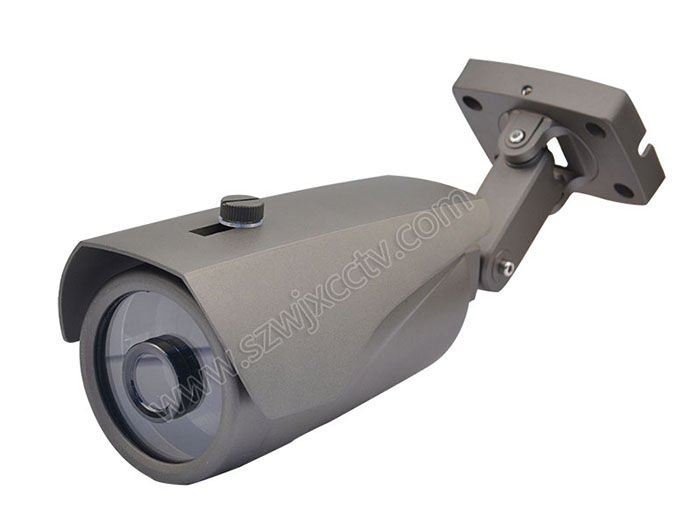
The infrared window must do two things at the same time
The design goal of the infrared window is twofold: to allow 850 nanometer or 940 nanometer infrared light to pass through efficiently, while blocking visible light to prevent fill light from being seen at night or interfering with imaging. Infrared-transmitting plastics are mostly black infrared-transmitting acrylic or polyethylene. The transmittance in the visible light region is low, reaching more than 80% near 850 nanometers. It is easy to mold and the cost is controllable. It is the mainstream choice for gun and ball machines.
The glass route uses infrared transmission glass or coated windows, which have better transmittance and scratch resistance, and are suitable for models with high protection or long-term exposure to the sun. Which one to choose, first look at the fill light wavelength and required irradiation distance, and then look at the appearance requirements and cost. The order cannot be reversed.
Wall thickness and shape will eat up the transmittance
The transmittance of infrared-transmitting plastics decreases significantly with the wall thickness. For the same material, increasing from 1.5 mm to 3 mm may reduce the transmittance by more than 10% at 850 nm. During the design, the window is partially thinned to 1.2 to 2 mm, and the back is matte to reduce the specular reflection of light on the plane, and the fill light utilization rate will be significantly improved.
In terms of shape, avoid having a large flat surface facing the fill light. The flat surface will reflect the image of the lamp bead back to the lens, causing light spots or foggy whitishness to appear on the screen at night. The two most effective methods are to make the window an inclined plane at a certain angle with the light panel, or to add a ring of shading tube to separate the lamp cavity and the lens cavity.
Assembly and inspection points
The coaxiality between the lens mount and the window determines whether there are vignetting in the four corners of the screen. When the base body and shell are die-cast in one piece, the processing reference should be consistent with the window mounting surface; for split structures, positioning pins are used to ensure the consistency of repeated assembly. The bonding surface between the window and the casing is glued, and the glue line is continuous and bubble-free, making it waterproof and light-proof.
- The transmittance at 850 nanometers is not less than 85%, and the 940 nanometer model is confirmed based on the actual measured value of the material;
- The wall thickness of the window is controlled between 1.2 and 2.0 mm, and the transition between thickness and thickness is rounded;
- A light-shielding rib is provided between the lamp cavity and the lens cavity to avoid cross-light;
- Real shooting inspection at night, focusing on the four-corner illumination and screen fog.
Infrared transmission design is the intersection of optics, structure and technology. In this type of shell project, Weijiaxin usually puts the window material, wall thickness and light panel position on the same structural drawing to check. After the mold test, it first takes real photos at night and then decides on the appearance treatment to avoid drawing conclusions just by looking at the daytime samples.