
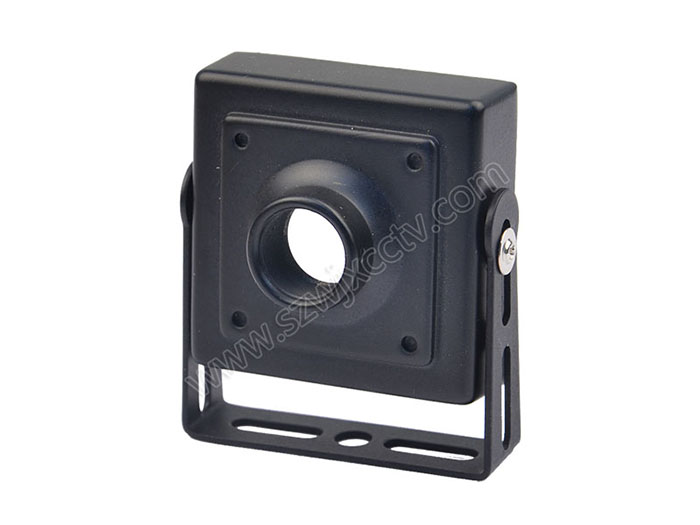
First distinguish the depth of the scratch
If the casing is scratched upon receipt, whether it will be repaired or scrapped depends on whether the scratch penetrates the coating and lifts up the substrate. Use your fingernail to scrape lightly horizontally. If it is stuck and accompanied by white marks, most of them have reached the base material; if only a light bright line is left on the film surface, it is a superficial scratch. The former cannot be covered by touch-up paint, while the latter can be solved with local treatment.
There is another category that is often misjudged as scratches: cold cracks and mold strains on the surface of die castings, which are present during pre-treatment, and a shallow groove appears along the texture after powder spraying. Such marks should be dealt with during the polishing stage. Repairing after spraying is equivalent to pushing the problem to the last step.
Applicable boundaries of the three repair paths
For shallow scratches, polish and partially touch up the paint. Use fine sandpaper to polish along the grain, then use the same batch of paint to touch up the color, and make a feather transition on the boundary. Where the film thickness is lower than the required value, it must be replenished to the specified value, otherwise the color will appear different after half a year of outdoor use. This road is low-cost, but it is not friendly to dark high-gloss surfaces. The patched areas can be seen as hazy under side light.
Scratches that expose the base material can only be done by stripping off the paint and re-spraying the entire piece. Use a special stripper to remove paint. Pre-treatment must be done again after treatment, and it cannot be covered directly. There is residual oxide scale and release agent on the surface of the die-casting parts, eliminating the need for re-spraying the parts before pre-treatment, and the adhesion test often peels off the entire piece.
Scratches on structural parts should be treated differently. If the scratches installed in the load-bearing position are accompanied by micro-cracks, the strength cannot be restored and the product will be directly scrapped. The way to judge is to look at the crack direction under a magnifying glass. Cracks perpendicular to the direction of stress have the highest risk.
Suppress the repair rate and move it to the front end
Rework is a remedy, not a process. The sources of scratches are concentrated in the three stages of transfer, hanging and packaging: workpieces are transferred between workstations with bare hands, the fulcrum of the hanging tool is too sharp, and the packaging lining is of inappropriate size causing the shells to rub against each other. Weijiaxin switched to a divided turntable after the spraying line, changed the fulcrum of the hanger to a round head and added rubber, and the lining was grooved according to the shape of the shell. After the three modifications, the proportion of appearance repairs dropped significantly.
- The judgment is compared with a standard sample, and the scratch length and depth are graded and recorded without relying on verbal description;
- The film thickness of the repaired paint area should not be lower than that of the adjacent area, and the color difference should be controlled within 1.5;
- Repainted parts must be completely processed before leaving, and direct covering on the old film is prohibited;
- Reworked parts are individually marked, and the reasons and processing methods are recorded with the batch.
Appearance standards should be clearly discussed at the order confirmation stage. Take a set of physical samples of acceptable and unacceptable scratches, and each party will keep a set. When standards are vague, disputes over the amount of repair work are often more time-consuming than the repair work itself.