
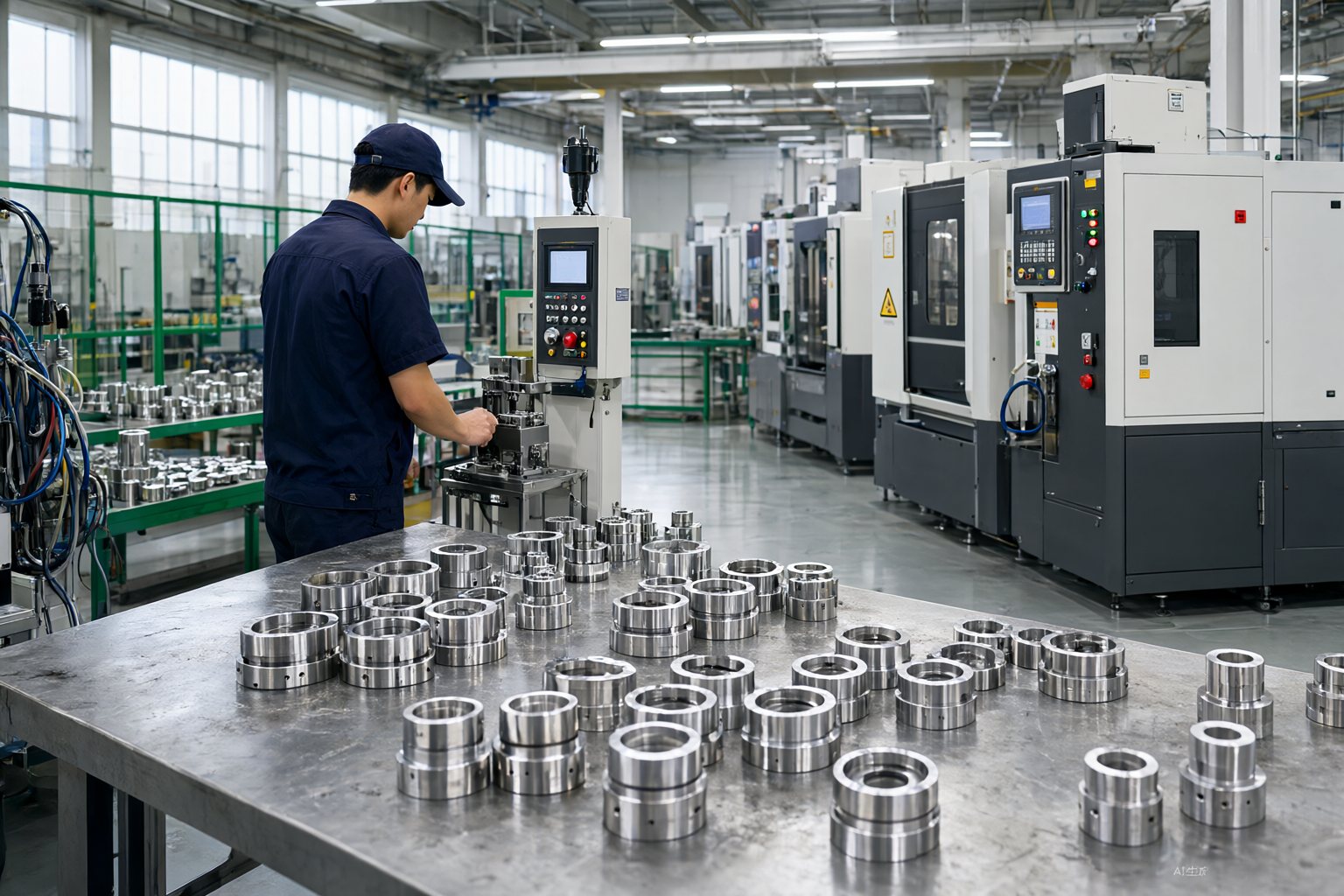
Camera housings are usually produced either by zinc/aluminum die-casting or by CNC machining. The two are not mutually exclusive — the right answer is often a combination driven by volume, structure and finish.
When die-casting fits
Die-casting suits stable volume and complex shapes. Once tooling is in place, unit cost falls with quantity, and wall thickness, mounting bosses and sealing grooves can be formed in one shot. Zinc alloy takes powder coating and fine printing well.
When CNC fits
CNC suits small batches, fast iteration and high-accuracy mating faces. No tooling is required and design changes are program changes, but material use and machine time per part are higher — ideal for prototypes and small-to-medium series.
The combined process
A common approach is to die-cast the shell, then CNC-finish sealing faces, threaded holes and mounting surfaces. Deburring and pretreatment are required before coating to ensure adhesion.
How to decide
Expected annual volume, structural complexity, appearance level and lead time are the four main factors. Many projects start with CNC prototypes to validate the structure, then move to a die-casting tool for volume.