
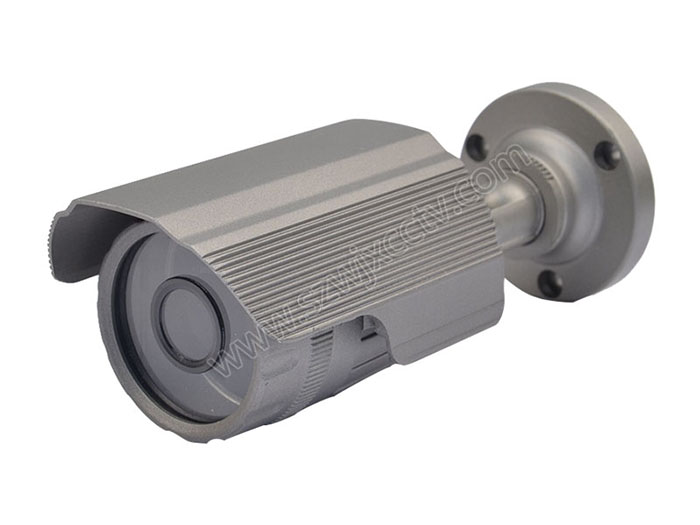
The color is first determined by the material
There are three ways to color aluminum alloy die-casting parts: powder spraying, liquid paint and anodizing. The powder-coated film is thick and has strong hiding power, and is suitable for shells with complex shapes that need to cover parting lines and flow marks; anodizing embeds color into the oxide film and retains the metallic texture, but it is only effective for aluminum. In the same batch, the color difference is obvious in locations with different wall thicknesses and silicon contents. Zinc alloy die-casting parts are generally electrophoresed and spray-painted, and are directly oxidized without coloring.
Giving a color number by a customer does not mean giving an enforceable standard. The color number depends on the specific process and film thickness. First make a color plate, then spray one on the real shell to confirm whether the curved surface and the flat surface are consistent under natural light. Dark colors tend to appear gray on curved surfaces, while light colors tend to show off ribs. These two types of problems can only be seen on the upper part.
Several methods and choices of LOGO placement
For small batches and multiple versions of customized shells, silk screen printing is the most flexible, has low screen printing costs, and can change words and colors quickly; the disadvantage is that the paint layer is thin and will wear off if wiped for a long time, and the overprint on the concave and convex surfaces is easy to deviate. Laser marking is suitable for contrasting the depth of the metal's natural color. There is no additional material in the marking area and it has good wear resistance. However, it only has gray scale and is not suitable for color patterns.
Laser engraving can carve a certain depth and has a distinct feel, which is suitable for model and serial information that requires long-term identification; for anodized parts, the laser can partially burn off the oxide film to expose the aluminum base, forming light-colored characters. Another method is two-color injection molding, which incorporates the color into the body of the plastic part, but requires two sets of molds. This is only possible in large quantities.
The judgment can be simplified into three items: whether the batch size exceeds the critical point of screen amortization, whether the pattern requires color and gradient, and whether it will be rubbed repeatedly during use. As long as there is one point that is wear-resistant, priority will be given to laser; if multi-color overprinting is required, silk printing or pad printing can only be used.
Please keep a sample when confirming the proofing
Confirmation of color and logo cannot only rely on a photo. Weijiaxin usually keeps three pieces of information at the same time during the proofing stage: the process color plate, the physical sample with the pattern, and the confirmation sheet indicating the film thickness and process parameters. The three pieces will be sent together for signature, and mass production will be carried out according to the same set of parameters. There will be no color change when returning orders and changing batches.
- The color difference is determined with a colorimeter, controlled within 1.5, and compared visually under a standard light source;
- The thickness of the screen printing film is 10 to 15 microns, and the adhesion is tested according to the cross-hatch method;
- The laser marking depth is 0.05 to 0.15 mm, and the character height is not less than 3 mm to ensure readability;
- The confirmation sheet states the process, film thickness, color number and comparison light source, and files it with the batch.
Color and pattern are the first parts that customers see, and they are also the parts that are most likely to be distorted in the second batch. Only by defining the process path, inspection methods and confirmation samples can we talk about consistency later.