
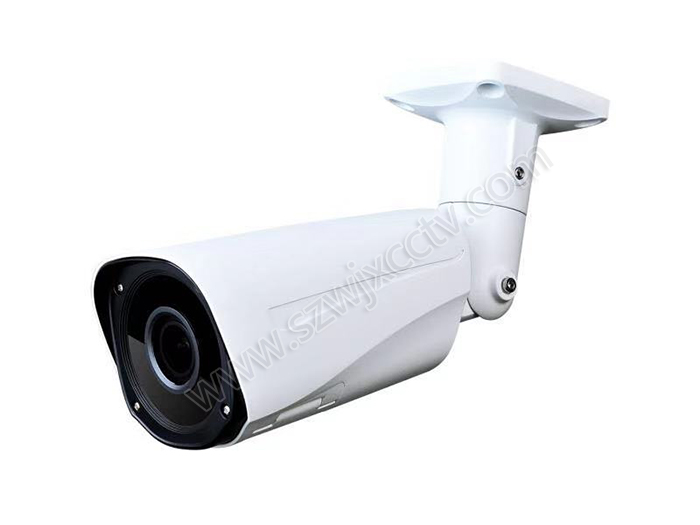
What is the vibration and drop assessment?
Cameras are subjected to two types of mechanical stress during transportation, installation and long-term operation: one is continuous low-amplitude vibration, caused by truck bumps, bracket resonance or fan rotation; the other is occasional impact, caused by transportation drops and tool collisions. The former tests whether the screws are loosened and whether the internal components are displaced, and the latter tests whether the shell is cracked and the seal fails. Confusing the two, often a lot of testing is done, but problems still occur on site.
Test conditions and judgment criteria
Vibration is usually divided into packaged state and bare metal state. The packaging state simulates logistics. The frequency sweep range covers five to five hundred hertz. Each axis lasts for a sufficient time. Focus on observing whether the lining collapses and whether there are wear marks at the connection between the shell and the bracket. The bare metal state is closer to the wall-mounted working condition. The amplitude should not be too high, but the duration must be ensured to allow the fasteners to have a chance to loosen.
The height of the drop is determined based on weight and packaging form. Generally, the order of one corner, three sides, and six sides is taken. After the drop, do not rush to power on. Do the appearance and sealing inspection first. The judgment is recommended to be written in three quantifiable indicators: no penetrating cracks in the shell, the sealing surface is not misaligned, and the residual torque of the fastener is not less than 60% of the initial value. There is no need to argue based on feel when you have numerical values.
Typical failures and improvement directions
The more common failures in the analysis are cracking around the screw holes and fatigue at the root of the bracket. The former is mostly related to insufficient wall thickness or lack of fillet transition at the root of the stud. The latter often occurs at the junction of thin and thick walls of die castings, where the solidification sequence is inconsistent and leaves internal stress. Improvements usually start from the structure: increasing the fillet at the root of the stud, making the transition from thickness to thickness into a gradient, and adjusting the gate position and exhaust on the mold if necessary.
- Whether the sealing ring is offset after the impact, check whether the groove indentation is uniform
- If there are any fine cracks at the joint between the transparent cover and the shell, observe with a magnifying glass
- Whether there are traces of displacement on the internal bracket and fill light panel< /li>
- Whether the threaded holes are threaded, and whether the torque can reach the standard after reassembly
Weijiaxin arranges vibration and drop verification during the sample stage of waterproofing and gun housing, exposing structural weaknesses in the design stage, and the cost is much lower than mold modification after mass production.
Passing the test does not mean worry-free on-site. The flatness of the mounting surface, the pretightening force of the screws, and the rigidity of the bracket will all change the actual force. Writing these conditions into the installation instructions upon delivery is often more effective than adding another round of testing.