
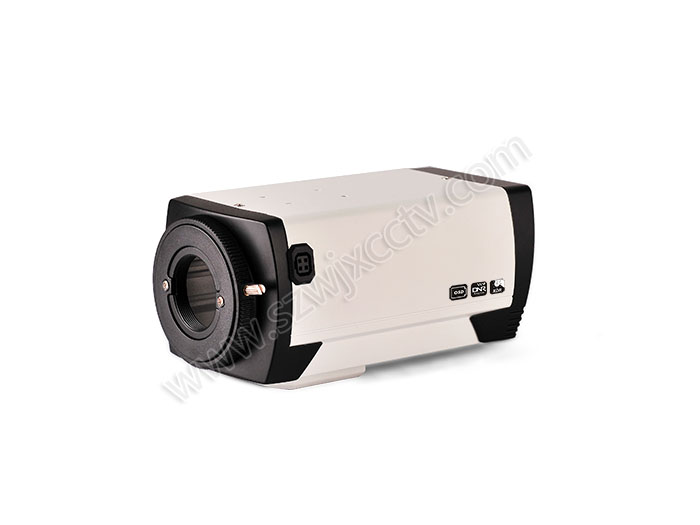
Why the shell must be equipotential
The metal shell is both a shield and a discharge channel in the face of lightning strikes and surges. If there is no low-impedance connection between the enclosure and the ground of the internal circuitry, a potential difference will appear between the two, and the discharge will travel from the weakest point, which is often the network transformer or power module. The function of equipotential connection is to suppress this difference to a small enough level. The shielding effect relies on a continuous low-resistance path, and if one part is broken, the entire section will fail.
The anodized shell has a hidden problem: the oxide film is insulating, and the screws appear to be connected when screwed on the oxidized surface, but the actual contact resistance is very high. The solution is to conduct local conductive treatment at the grounding position, reserve a boss during die-casting and remove the oxide layer through post-processing, or use a toothed grounding pad to pierce the film layer.
How to take the grounding path
The path should be short, thick, and single. The grounding post in the case is directly connected to the motherboard ground plane, and an independent ground wire is used to bridge the case and the bracket. Do not rely on screws to double as ground paths. The bracket is then connected to the pole or building ground system, with the resistance of the entire path controlled to less than 4 ohms, which is a normal requirement in most engineering codes.
The network interface is another entry point. For models powered by network cables, the surge is brought directly to the interface along the network cable. No matter how well the shell is grounded, it cannot block the common mode impact. Add a surge protection device to the interface. The ground of the device should be connected to the shell ground as close as possible. The shorter the trace, the better. The parasitic inductance introduced by the long trace will invalidate the clamping voltage.
Inspection and installation reminder
- Use a grounding resistance tester to measure the resistance from the shell to the grounding point, and record it one by one;
- Check whether the grounding screw has anti-loosening measures to avoid failure after transportation vibration;
- Use special gaskets or polishing for parts with oxide film to verify continuity;
- Confirm that the pole is well grounded during installation, and do not regard the shell as the only grounding body.
Most on-site problems occur when the grounding chain breaks at the bracket. There is a layer of paint between the pole and the hoop, and the jumper wire is not connected. The whole machine is suspended and grounded. When a lightning strikes, the current can only flow along the network cable. The first thing to be damaged is the interface circuit.
Lightning protection is a systematic project, and the shell is responsible for the shielding and equipotential aspects. Weijiaxin determines the position of the grounding pole, conductive surface treatment and cable direction during the structural design stage to avoid pulling a wire outside to supplement the grounding after the whole machine is completed, which is neither reliable nor good-looking.