
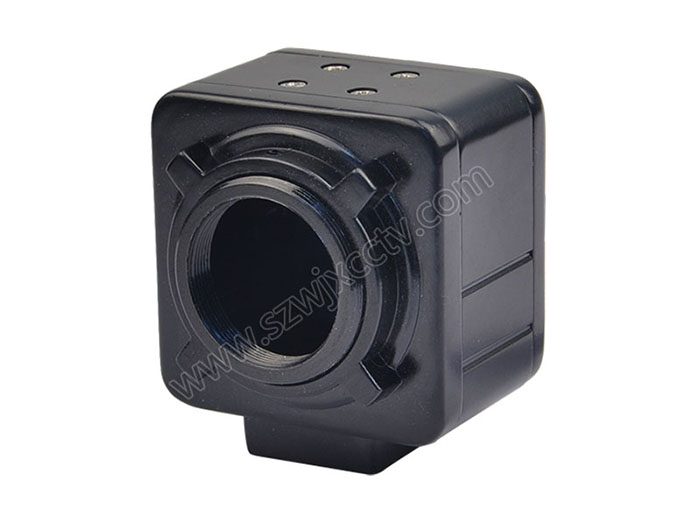
Dust mainly enters through three paths
The casing is marked with a dustproof level, but dust still accumulates in actual use. The reasons are mostly due to three paths: gap penetration caused by microscopic unevenness of the sealing surface, breathing effect caused by internal and external pressure differences, and capillary channels at the cable entrance. The first two are solved by structure and sealing, while the third is often ignored because the sheath and the joint are inherently mating surfaces.
The respiratory effect deserves a separate mention. The temperature difference between day and night causes the cavity to expand and contract repeatedly. Dust enters and exits from the weakest point with the airflow, and over time, it accumulates near the lens holder. The solution is not to make the shell more rigid, but to provide a controlled channel for the pressure difference, allowing the air to pass through the filter material and leaving the dust outside.
Several specific structural practices
The sealing groove should be made into a rectangular cross-section which is easier to compress than a semi-circle. The depth of the groove and the cross-section of the rubber strip are designed according to 20% to 30% of the compression amount. The width of the groove is about 10% wider than the rubber strip, leaving room for lateral deformation. A labyrinth step is added to the joint surface of the upper and lower shells. The height of the step is more than 1.5 mm. Even if the rubber strip fails partially, dust will have to go around two fold lines to enter.
Waterproof and breathable valves are installed in areas that need to balance air pressure. The membrane holes are on the order of 0.1 microns, which can block dust without hindering the discharge of water vapor. Use a locked waterproof connector for the outlet hole, and add a section of heat shrinkable tubing inside the connector to wrap the sheath to reduce capillary penetration. The rotating part uses a double-lip structure. The outer lip blocks dust and the inner lip blocks water. There is a dust discharge gap between the two lips.
How to test close to real working conditions
The laboratory conducts talcum powder box tests in accordance with dust protection requirements. The samples are placed under negative pressure. After the test is completed, the shells are opened to see if there are any visible deposits inside. This test reflects the overall level of the sealing surface, but does not show long-term breathing effects. The supplementary method is to conduct a composite test of temperature cycle and dust, let the cavity expand and contract repeatedly, and then check the inside of the lens window.
- The flatness of the sealing surface is controlled within 0.1 mm to avoid local gaps;
- The compression amount of the rubber strip is 20% to 30%, and permanent deformation will be accelerated if it exceeds 35%;
- The breather valve is installed at a high position in the cavity, with the membrane surface facing downward, to avoid water blockage;
- Maintain positive pressure and dust removal in the assembly area to prevent foreign matter from falling in when closing the shell.
Dust-proof and waterproof share the same sealing structure, but the difference is that it is more sensitive to microscopic gaps. During the shell review of outdoor models, Weijiaxin will draw the ventilation path and cable entrance into the structural diagram to avoid having to refill the exterior glue after the entire machine is completed.