
Which direction does the impact come from
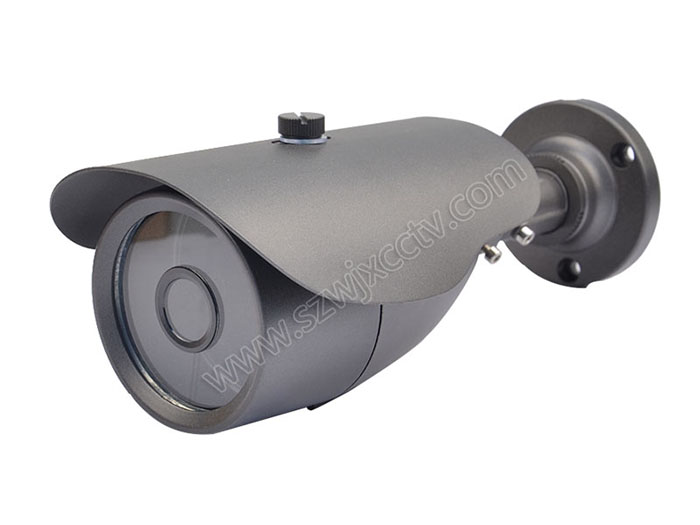
There are two types of impacts faced by outdoor equipment. One type is accidental collision, when tools or ladders hit the casing during installation, maintenance, and landscaping and pruning; the other type is deliberate damage, using hard objects to knock, pry the front cover, or pull the bracket. The two types of load directions are different: collisions are mostly point-like impacts, and the damage is manifested as local dents and coating damage; prying is a continuous bending moment, which tests the connection strength of the front cover and the main body. The destructive power of prying is often underestimated. The bending moment exerted by a crowbar between screws far exceeds the impact of a falling ball at the same location.
When evaluating, first clarify the installation height and accessibility. Installation in a location above three meters that requires a ladder to reach is mainly to prevent accidental collisions; only when it is installed in walls, doorways and other places within reach, anti-riot structures need to be considered.
Structural focus
The shell material and wall thickness are the basis. The die-cast aluminum shell has good overall rigidity, with a wall thickness of more than 3 mm and larger rounded corners, which can disperse point impacts to a larger area; zinc alloy has high hardness and strong deformation resistance, making it suitable for small-sized front covers. Thin-walled sheet metal parts are more likely to dent under the same weight and need to be reinforced with internal reinforcements. The damage range of the surface coating under impact also reflects the degree of deformation of the substrate.
The connection between the front cover and the main body is the weak link. The number and distribution of screws determine the resistance to prying. Sink the screws into the sinking platform and add metal bushings to reduce local crushing. The window glass is another weak point. If the thickness is insufficient or it is only fixed by glue, the whole piece will easily fall off after impact. Double fixation with pressure rings and pressure glue is more secure. The more screws, the better. Too dense holes will weaken the front cover frame and create a new starting point for cracking.
How to verify
Verification must be done with the assembly status. Install the shell on the bracket, and conduct a ball drop or pendulum impact according to the actual installation posture. The impact points are selected at the center of the front cover, the edges, and the four corners of the window. After the impact, not only the appearance is inspected, but the air tightness and internal component displacement must also be re-measured, because deformation of the shell may squeeze and narrow the sealing gap. The impact height is set according to the actual accessible height of the equipment, and it is not necessary to apply the same value uniformly.
- The impact point covers the flat surface, edges and screw seats, not just the front side;
- Retest the air tightness after the impact to confirm that the seal is not damaged;
- Check whether the window glass has cracks that have expanded and the adhesive layer has detached;
- Record the depth of the dent and the range of coating damage as a basis for judgment.
Weijiaxin will discuss the location of the impact point and the fixing method during the review of front cover structural parts, and determine the verification plan first and then the structure. Anti-riot is not about adding thick walls, but about allowing the impact force to have a way to go.